The Future of Web Development in 2026
For businesses planning their digital roadmap — what's changing, what's staying, and how to build for what's next.
As we look toward 2026, the landscape of digital engineering is undergoing a quiet but profound transformation. We are moving past the era of experimental digital disruption and entering a phase of operational maturity. For businesses, this means the bar for what constitutes a viable digital product is rising sharply. The focus has shifted from simply having an online presence to building resilient, scalable ecosystems that drive actual business value.
At Boost Agency Ltd, we advise organizations to view web development not as a one-time project, but as a continuous strategic advantage.
Where Web Development Stands Today
To understand where we are going, we must acknowledge where we are. The current market is defined by a significant uptick in custom web application development. Businesses are no longer satisfied with static brochure sites; they require dynamic platforms that integrate with CRMs, automate workflows, and provide real-time data analytics.
There is a heavy reliance on scalable platforms that can handle fluctuating traffic loads and complex transaction volumes. Whether in fintech, healthcare, or e-commerce, the demand for enterprise-grade reliability has trickled down to mid-sized businesses.
Is Web Development Dying? Debunking the Myth
A recurring question in industry circles is: is web development dying? The concern usually stems from the rise of no-code builders and automated tools. However, this view confuses simple website creation with complex software engineering.
In reality, web development is becoming more critical, not less. While basic templated sites are easier to build, the complexity of the systems businesses actually need is skyrocketing. The demand for skilled developers who can navigate API integrations, security protocols, and database architecture is growing. The profession isn't dying; it is specializing. Low-code tools handle the simple stuff, pushing developers to solve higher-order problems. Hire web developers who understand this shift, and you invest in problem-solving capability, not just coding syntax.
Development Models That Will Dominate 2026
The way companies structure their engineering resources is evolving. The rigid binaries of the past are dissolving into more flexible, hybrid approaches.
The debate between building an internal team versus choosing to outsource web development is becoming less about "either/or" and more about "when and how." In-house teams offer deep institutional knowledge and immediate communication, but they carry high overhead and can be difficult to scale quickly. Outsourcing provides access to a global talent pool and cost efficiency, but it requires robust management to ensure quality. By 2026, the most successful companies will use a hybrid model, maintaining a core internal team for strategy while leveraging outsourcing for burst capacity and specialized skills.
For agencies and consultancies, white label web development will become a primary lever for growth. As client demands for technical depth increase, many agencies find their internal teams stretched thin. White-label partnerships allow agencies to deliver high-end technical work under their own brand without the overhead of expanding their headcount.
We predict the dominance of the hybrid model. Companies will maintain a small core of internal product owners and technical leads, while relying on external partners for execution. This balances the control of in-house teams with the flexibility of outsourcing.
The Expansion of Web Application Development Services
As businesses digitize every aspect of their operations, web application development services are expanding in scope. We are moving away from monolithic applications toward modular, API-driven ecosystems.
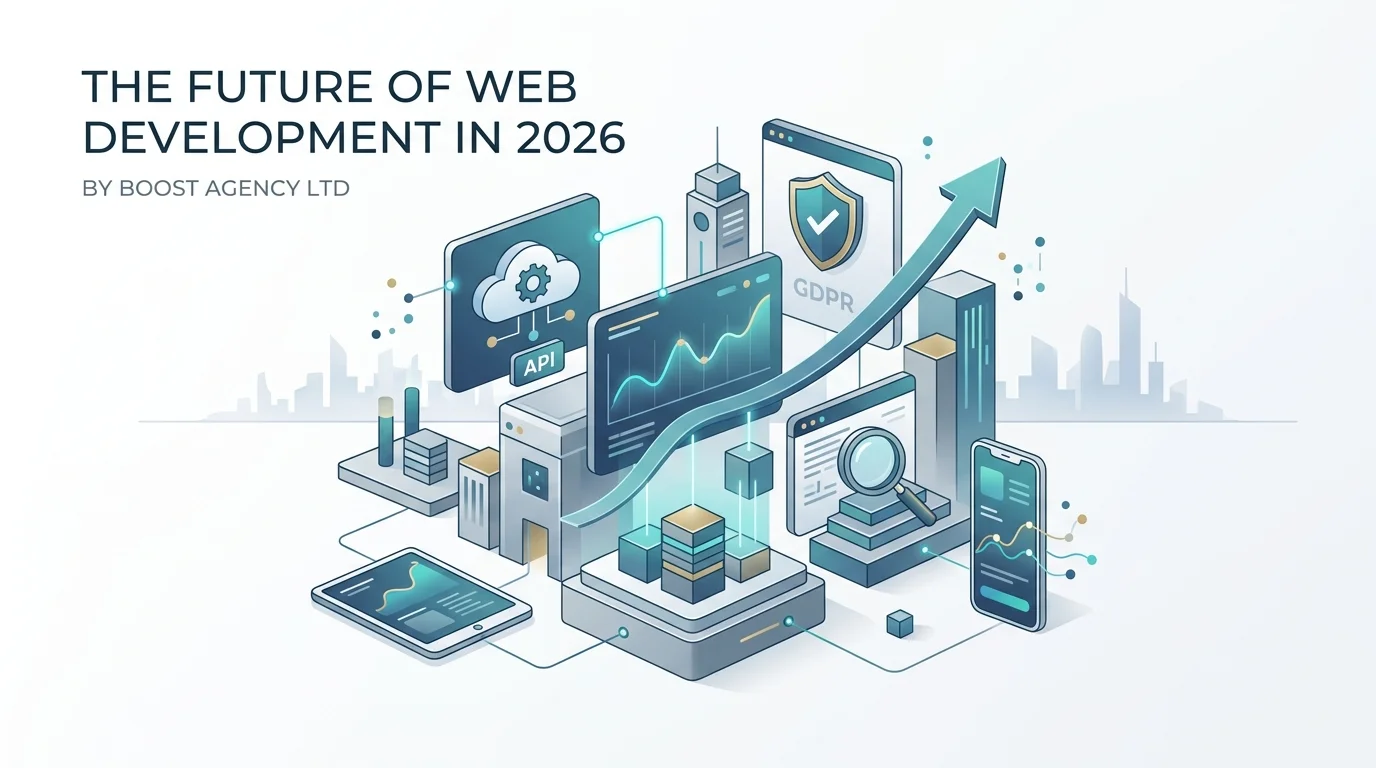
In 2026, cloud-native architecture will be the standard, not the exception. Applications will be designed to auto-scale and recover from failures automatically. Furthermore, security will shift from a perimeter-based defense to a "zero trust" model, where every request is verified. Professional web development services will need to integrate advanced security measures, such as automated vulnerability scanning and compliance checks (GDPR, CCPA) directly into the CI/CD pipeline.
The Growing Role of SEO Web Development
The silos between development and marketing are crumbling. In the future, technical SEO will be a foundational requirement of the build process, not an afterthought. This is the essence of SEO web development.
Search engines are prioritizing user experience signals more than ever. Core Web Vitals, metrics that measure loading speed, interactivity, and visual stability, are ranking factors. This means an SEO web developer must be involved from the architectural phase. You cannot have an effective SEO strategy without a technically sound website.
Front End Web Development Services in 2026
The front end is the face of the business, and the expectations for front end web development services are higher than ever. Users demand app-like experiences on the web.
Performance optimization will be the primary differentiator. Bloated code that slows down load times will be unacceptable. Developers will need to master advanced techniques like lazy loading, code splitting, and edge computing to deliver content instantly. Additionally, accessibility will move from a "nice-to-have" to a legal necessity. Building accessible interfaces isn't just ethical; it expands market reach and ensures compliance with international standards.
How to Choose a Web Development Company in 2026
With the complexity of the digital landscape increasing, how to choose a web development company becomes a strategic decision. You cannot simply look at a portfolio of pretty designs. You must evaluate technical depth.
Look for partners who demonstrate architectural foresight. Do they ask about your scaling needs? Do they discuss maintenance and documentation? The top web development firms will distinguish themselves by their process transparency. They should be able to articulate their testing methodologies, their deployment strategies, and their approach to security.
What Will Separate Top Web Development Firms from the Rest
The gap between average agencies and the top web development firms will widen based on methodology. Average firms focus on delivery, getting the code shipped. Top firms focus on outcomes and longevity.
Top-tier firms will employ structured methodologies that prioritize code quality, automated testing, and documentation. They understand that software is never "finished." They offer post-launch optimization and support plans that treat the website as a living entity.
Strategic Advice for Businesses Preparing for 2026
For businesses planning their digital roadmap, the advice is simple: invest in scalable foundations now. Do not cut corners on architecture to save a few months of development time. Balance the immediate cost with the long-term value of maintainability.
Align your web development strategy with your broader digital growth strategy. If you plan to expand into new markets or integrate AI-driven features later, your current architecture must support those pivots. Whether you utilize white label web development or build an internal team, ensure that knowledge transfer and documentation are prioritized.
The future of web development in 2026 is not about flashy gimmicks. It is about stability, performance, and strategic integration. As the digital world becomes more crowded, the quality of your engineering will be your competitive differentiator.
At Boost Agency , we believe that success comes from planning for the long term. By understanding these trends and choosing partners who prioritize quality and compliance, businesses can build digital platforms that stand the test of time. The tools will change, but the principles of solid engineering which is clarity, efficiency, and user focus, remain constant.