Can You Advertise CBD on Google? What's Allowed in the UK, US and EU
The short answer is "barely, and only in three US locations." Here's exactly what Google allows, what it doesn't, and where CBD brands should put their budget instead.
If you run a CBD brand, you've probably tried to advertise CBD on Google at least once. Most people get the same result: a disapproved ad, a vague policy email, and maybe a warning on the account.
It's frustrating, because Google is where people actively search for CBD products. Thousands of searches a day for balms, oils and creams, and you can't put an ad in front of any of them.
Well, almost any.
I've worked with CBD brands in the UK, US and Europe, and the rules are tighter than most owners expect, with one small opening in the US. This guide breaks down what Google actually allows by region, what certification you'd need, the US law change landing in November 2026, and where your budget works harder if Google is a dead end.
The Short Answer: Can You Advertise CBD on Google?
Only in a narrow set of cases. Google's policy allows CBD ads under three conditions, and you have to meet all of them:
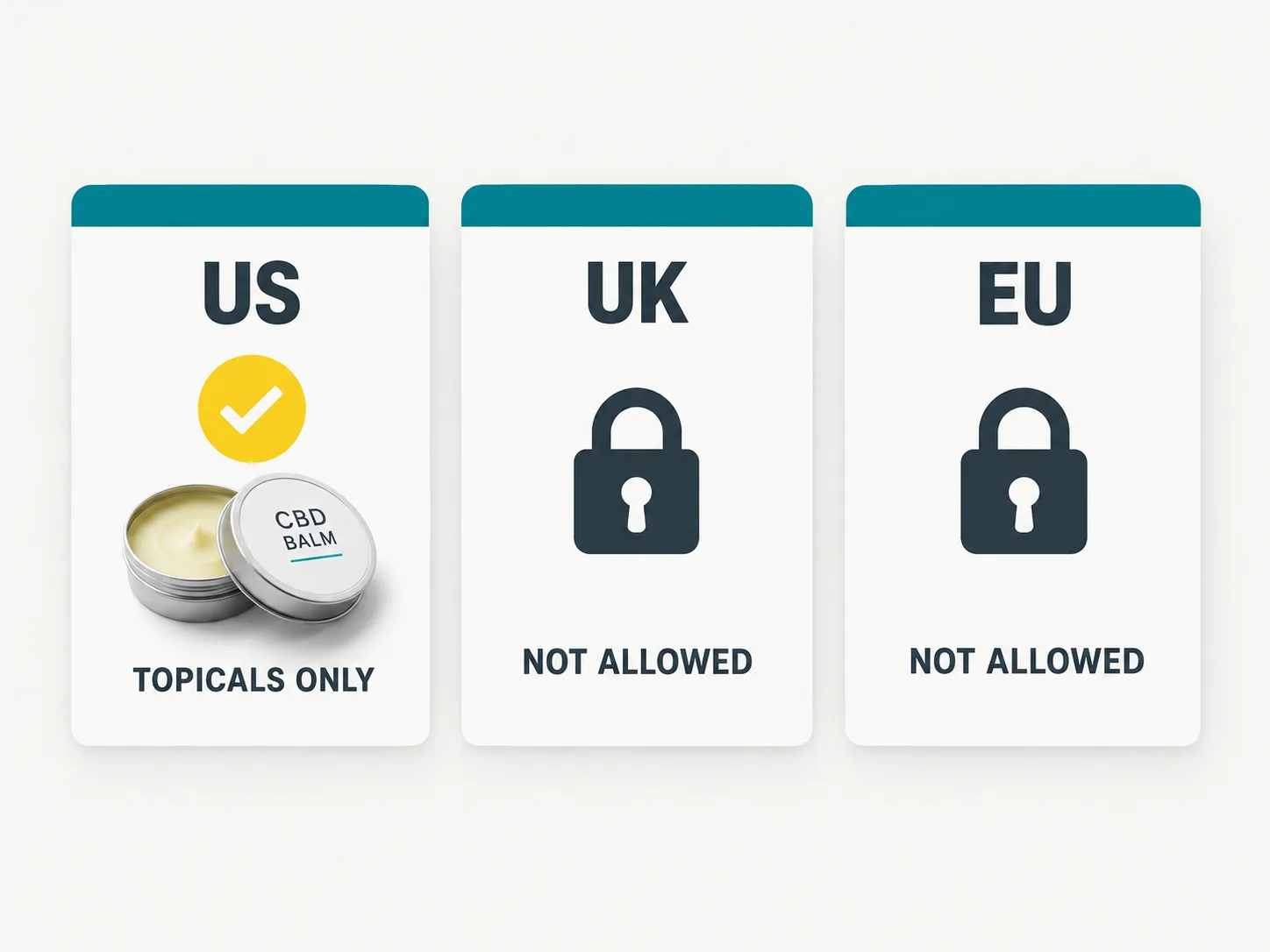
- The product is topical. Creams, balms, lotions and roll-ons. Oils, gummies, capsules, drinks and vapes are out.
- It's hemp-derived with 0.3% THC or less. You'll need lab reports to prove it.
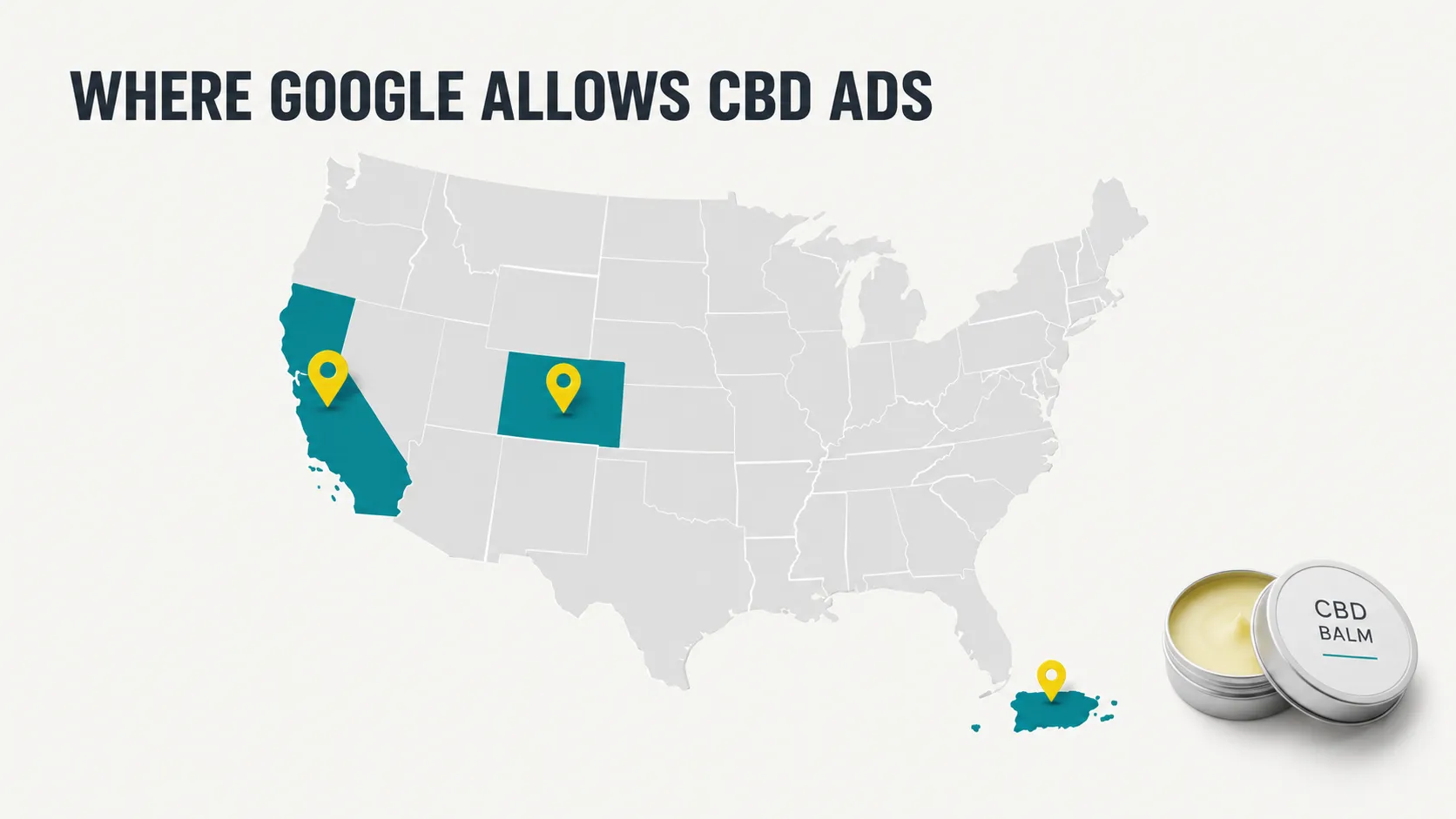
- Ads only target California, Colorado or Puerto Rico. Those are the only locations Google currently allows.
On top of that, you need certification from LegitScript and then from Google itself. There's a separate track for FDA-approved CBD medicines like Epidiolex, but that only applies to pharmaceutical manufacturers, so I'll leave it aside here.
Google opened this door in January 2023, and it hasn't widened since. If your brand sells ingestibles or sells mainly outside those three locations, the honest answer is no.
Can You Advertise CBD on Google in the US?
Yes, within the rules above. Here's what the process looks like for a topical brand.
LegitScript reviews your business, products and website. Expect to provide proof that your hemp is legally sourced, a certificate of analysis for each product line, and a website that makes no medical claims. Fees typically run from about $1,500 to well over $5,000 a year depending on your size, with annual renewal. Approval usually takes a few weeks if your paperwork is clean.
Once LegitScript approves you, submit Google's CBD application form. Fill in every field. Incomplete applications are the most common reason for delays.
Restrict location targeting strictly to California, Colorado and Puerto Rico. Keep ad copy free of treatment claims ("relieves arthritis" will get you disapproved), and make sure your landing pages only feature the topical products you're certified for. I'd start with standard Search campaigns. Shopping and Performance Max add extra review layers, and in my experience they're harder to keep approved.
This one matters right now. The US redefined hemp in a law signed in November 2025, with the change taking effect on 12 November 2026. Under the new definition, finished hemp products containing more than 0.4 milligrams of total THC per container no longer count as hemp at all.
Many full-spectrum CBD products go over that limit. If yours do, they may need reformulating, retesting and relabelling to stay legal, and your LegitScript certification depends on the products being legal in the first place. Several bills in Congress propose delaying or changing the rule, so check the current status with your compliance adviser before you plan Q4 spend.
Can You Advertise CBD on Google in the UK?
No. Google's CBD exception only covers those three US locations, so CBD ads targeting the UK get disapproved, topicals included.
That's true even though CBD is legal to sell in the UK. Ingestible CBD products need to be on the Food Standards Agency's novel foods list, and any advertising you do elsewhere still has to follow ASA and CAP Code rules, which means no medical or health claims unless they're authorised. So the product can be perfectly legal and still unadvertisable on Google.
Can You Advertise CBD on Google in the EU?
Also no. The EU is a patchwork of national rules on CBD, and ingestible CBD is treated as a novel food that still hasn't received EU-wide authorisation. Google keeps it simple by not allowing CBD ads in EU countries at all.
I've seen brands try to get around this by running ads for "hemp oil" or "wellness drops" and pointing them at CBD product pages. It works for a week or two, if that. Then the ads get flagged, and repeat violations can suspend the whole account, which takes your non-CBD campaigns down with it.
What Gets CBD Ads Disapproved on Google
Even certified US brands that can advertise CBD on Google run into problems. These are the usual culprits:
- Health claims in ad copy or on the landing page, like "reduces anxiety" or "helps you sleep."
- Ingestible products appearing anywhere on the landing page, even in a "you might also like" carousel.
- Location targeting that reaches beyond the three allowed locations, including "people interested in" a location.
- Cannabis leaf imagery and slang that reads as marijuana rather than hemp.
- Missing lab results or certificates of analysis that don't match the product listed.
How to Market CBD When Google Ads Says No
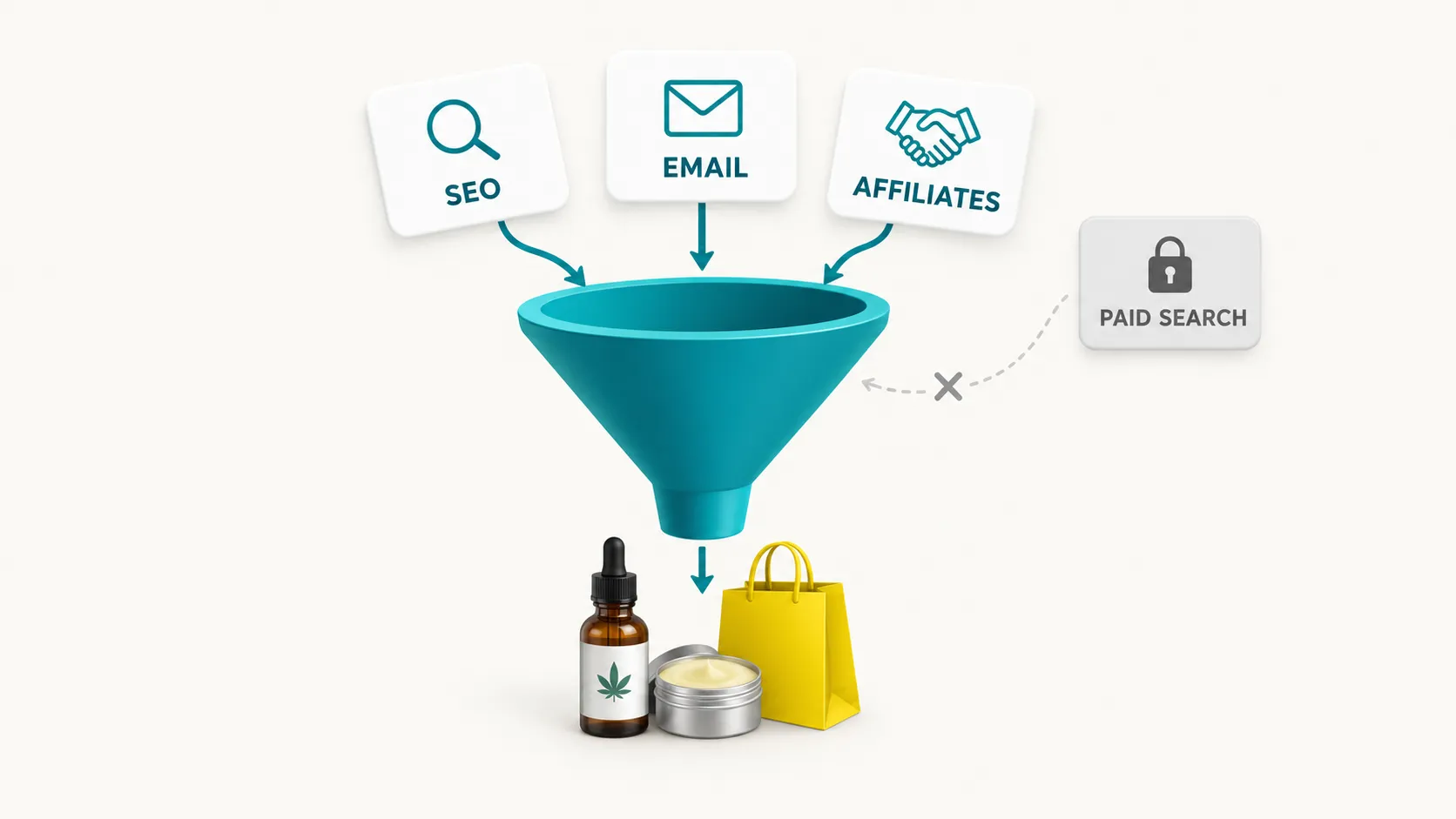
For most CBD brands, especially in the UK and EU, paid Google traffic isn't an option. Being unable to advertise CBD on Google doesn't mean Google is off the table, though. It means you earn your way in.
Organic search is the biggest opportunity CBD brands ignore. Guides that answer real questions ("CBD balm vs oil," "how to read a CBD lab report") rank, build trust and convert without ever touching an ad policy. Our SEO services for restricted niches start right here.
Every customer you acquire is far more valuable when you can sell to them again. A strong email flow, subscription offers and loyalty perks turn a single sale into repeat revenue that no ad platform can switch off.
Reviewers, wellness creators and niche publishers can promote CBD in ways ad platforms won't. Give them clear compliance guidelines so their content doesn't create claims you'd be liable for.
Where paid ads are possible, the funnel has to be clean from first click to checkout. That's how we approach profitable ads in restricted niches like crypto and CBD: compliant pages first, ads second.
So, can you advertise CBD on Google? In the US, yes, if you sell hemp-derived topicals, hold LegitScript and Google certification, and only target California, Colorado and Puerto Rico. In the UK and EU, no.
US brands should also watch the November 2026 hemp rule closely, because a product that's legal today may need reformulating to stay that way.
For everyone else, the smarter play is to stop fighting the ad policy and build the channels it can't touch: organic search, email, affiliates and a funnel that converts the traffic you do get.
Not Sure What Your CBD Brand Can Run?
Tell us where you sell and what you sell, and we'll show you which ad platforms are realistic for your products, what certification you'd need, and where your budget will work hardest.
Talk to Our Team